



Does Your Chevrolet Need a Tire Rotation, Wheel Alignment or Tire Balancing?
Your Chevrolet's tires do more than keep your vehicle moving. They affect braking, handling, ride comfort, and how confidently your vehicle responds to the road. However, tire rotation, wheel alignment, and tire balancing address different maintenance needs. At Rush Chevrolet, we created this guide to help drivers in Elgin, TX, and surrounding Central Texas communities recognize the differences, understand common warning signs, and determine when a tire inspection may be worthwhile.
What Does a Tire Rotation Do?
A tire rotation involves moving each tire to a different position on your vehicle according to the manufacturer's recommended rotation pattern. Front and rear tires can wear at different rates because they experience different steering, braking, and driving forces. Moving them periodically helps distribute that wear more evenly and can support longer tire life.
The correct rotation pattern depends on your Chevrolet's drivetrain, tire setup, and whether it uses directional tires or different-sized front and rear tires. Some configurations have restrictions that prevent a standard front-to-rear rotation. Your owner's manual provides the recommended interval and pattern for your specific vehicle. Regular rotation is also a good opportunity to have a technician inspect tread depth, sidewalls, and overall tire condition.
What Does a Wheel Alignment Correct?
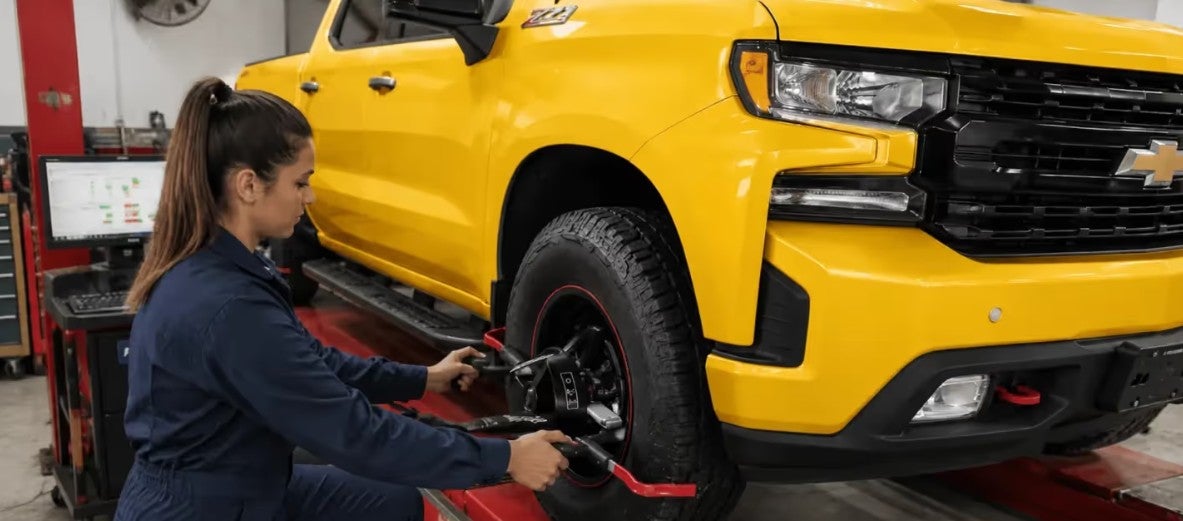
Wheel alignment checks the angles of your vehicle's wheels and adjusts them to the manufacturer's specifications when necessary. These measurements include camber, caster, and toe. When the angles are outside their intended ranges, your Chevrolet may develop uneven tire wear, an off-center steering wheel, or a tendency to pull in one direction.
Alignment can be affected by hitting a pothole, striking a curb, or driving over rough surfaces. Worn suspension or steering components can also contribute to alignment problems. An alignment service does not repair damaged components, so a technician may need to inspect the suspension and steering system before making adjustments.
How Is Tire Balancing Different?
Tire balancing corrects uneven weight distribution in the tire-and-wheel assembly. Even a small imbalance can cause noticeable vibration as the wheels rotate, particularly at certain speeds. During the service, a balancing machine identifies where weight needs to be adjusted, and a technician uses small wheel weights to help distribute the assembly's weight more evenly.
Balancing is particularly relevant when installing new tires, replacing a tire, or investigating vibration that develops while driving. Unlike alignment, balancing does not adjust wheel angles. It also does not correct suspension damage or uneven tire wear caused by other problems.
Here is a quick comparison of the three services:
Tire Rotation — Repositions tires to help distribute tread wear. Common reason for inspection: reaching the recommended maintenance interval or noticing uneven wear between tires.
Wheel Alignment — Checks and adjusts wheel angles to manufacturer specifications. Common reason for inspection: steering pull, an off-center steering wheel, or irregular tread wear.
Tire Balancing — Corrects uneven weight distribution in the tire-and-wheel assembly. Common reason for inspection: vibration through the steering wheel, seat, or vehicle at certain speeds.
What Can Cause Steering Wheel Vibration?
Steering wheel vibration can have several possible causes, and tire imbalance is only one of them. A bent wheel, damaged tire, uneven tread wear, worn suspension components, or brake-related concerns may also produce vibration. The speed at which the vibration occurs and whether it changes during braking can help a technician narrow down the possibilities.
If your Chevrolet develops a new or worsening vibration, arrange an inspection rather than assuming that balancing will solve it. A technician can examine the tires and wheels, check for visible damage, and recommend further diagnosis if needed.
Why Is Your Chevrolet Pulling to One Side?
A vehicle that consistently drifts or pulls to one side may have an alignment concern, but other issues can create similar symptoms. Tire pressure differences, uneven tire wear, brake problems, and suspension damage should also be considered. Even road slope can make a vehicle feel as though it is pulling, so the symptom alone does not confirm an alignment problem.
Have the vehicle inspected if the steering wheel remains off-center or your Chevrolet repeatedly moves toward one side on a reasonably level road. Addressing the underlying cause can help protect your tires and restore predictable handling.
Can You Need More Than One Tire Service?
Yes. These services address different problems, so your vehicle may need more than one. For example, a new set of tires may need balancing, while an alignment inspection may be appropriate if the old tires showed irregular wear. Rotation can still be part of routine maintenance, but it will not correct an alignment issue or repair worn suspension components.
After a significant pothole or curb impact, an inspection can help identify tire, wheel, steering, or suspension damage. If you notice vibration, pulling, or unusual tire wear, describe when the symptom occurs so the technician can investigate the right areas instead of recommending a service based on one symptom alone.
Schedule Chevrolet Tire Service at Rush Chevrolet
Our team at Rush Chevrolet can help drivers in Elgin, Bastrop, Austin, and nearby communities understand their tire maintenance needs. Visit our tire service information page or schedule an appointment with our service department. A technician can assess your Chevrolet's tire condition, review any handling concerns, and recommend the appropriate next step. Bring your owner's manual information and let us help you keep your tires in good condition.